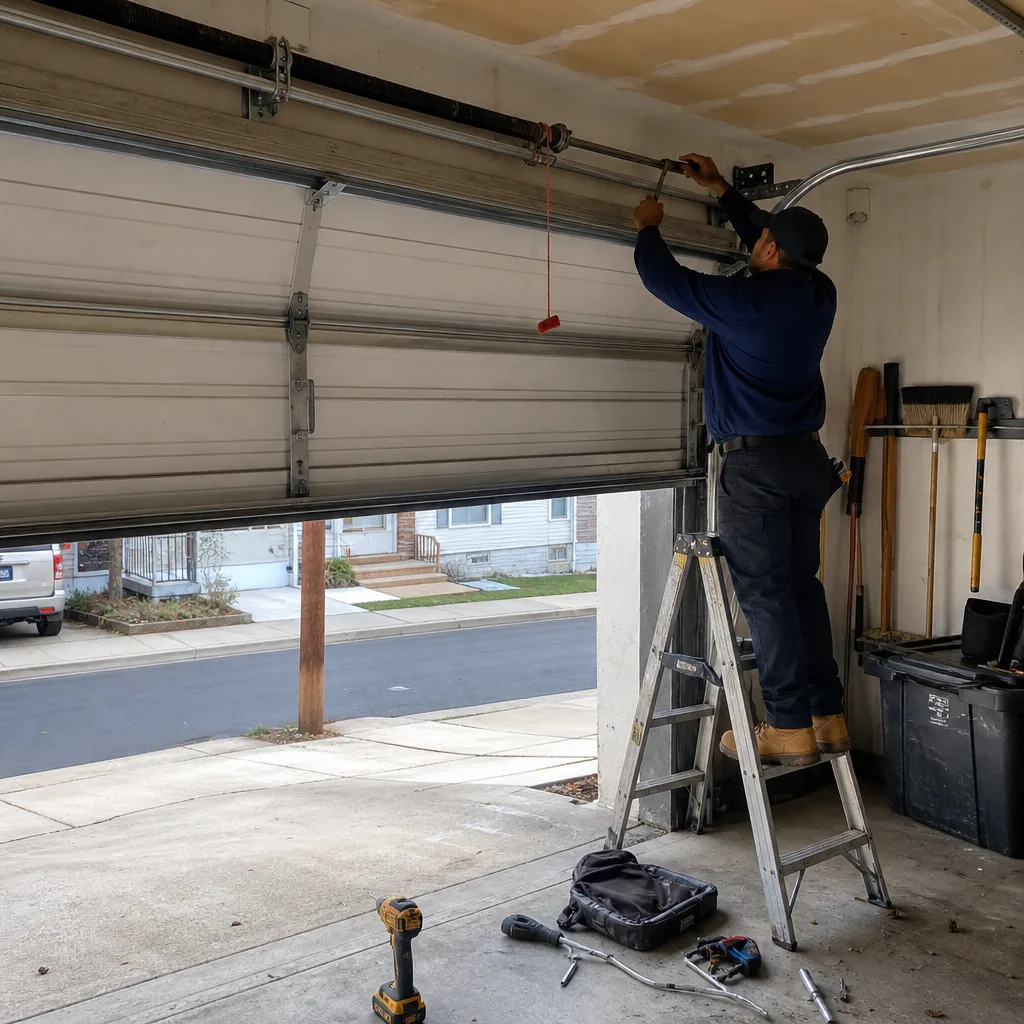
Last updated November 23, 2026
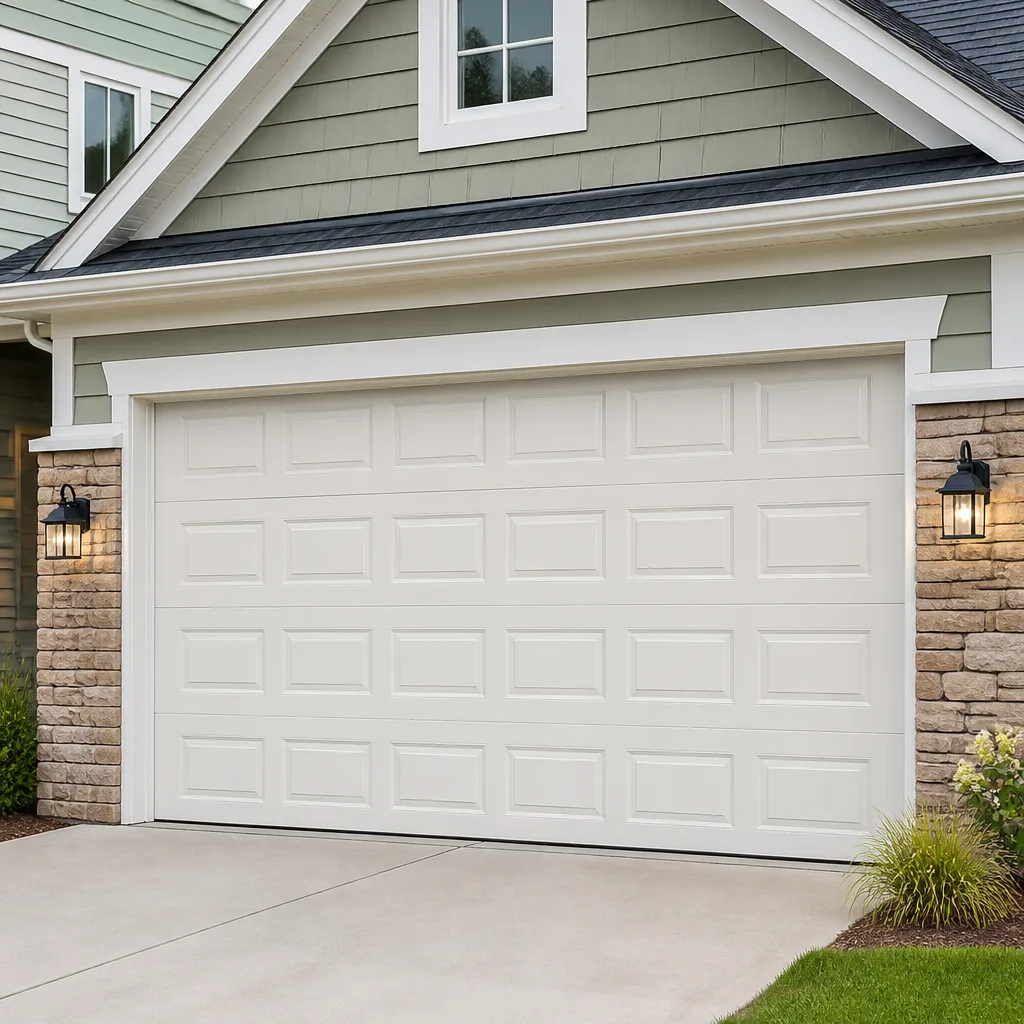 Raised-panel steel
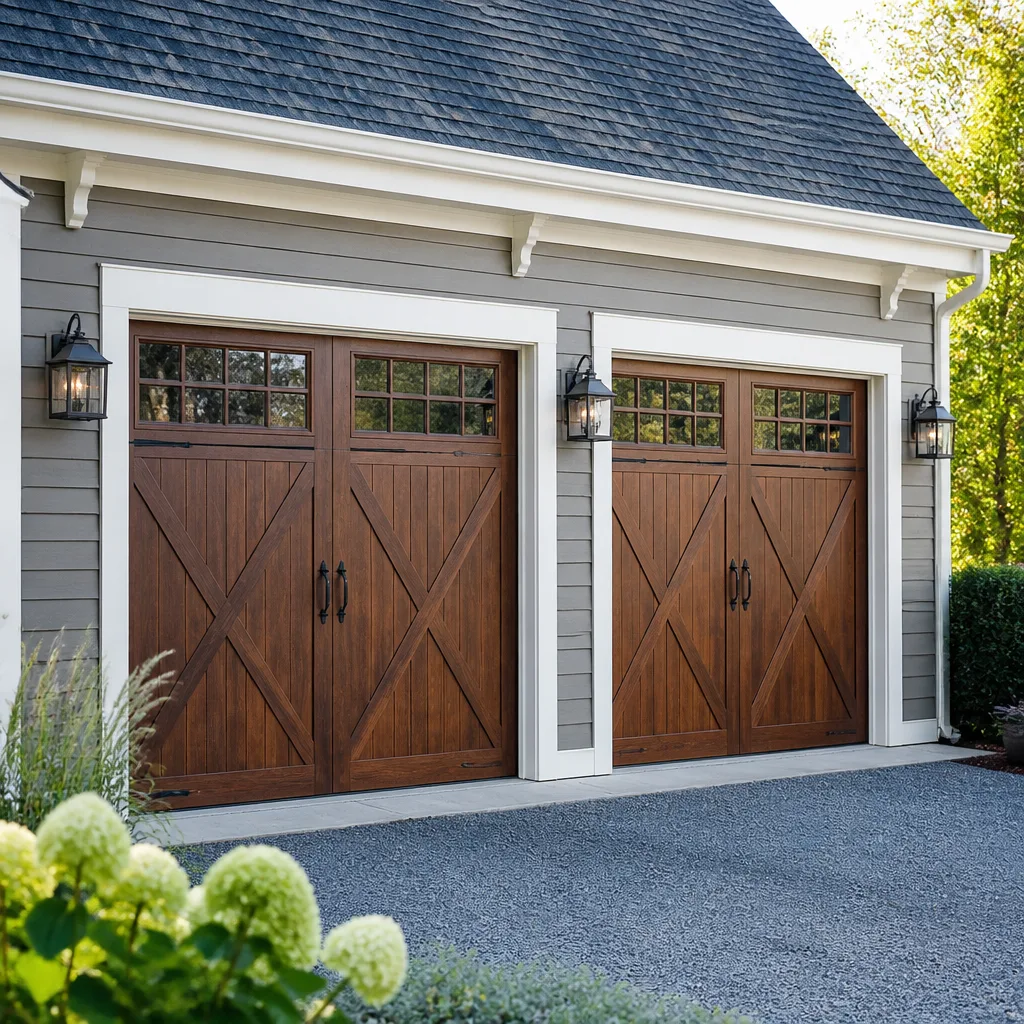 Carriage house
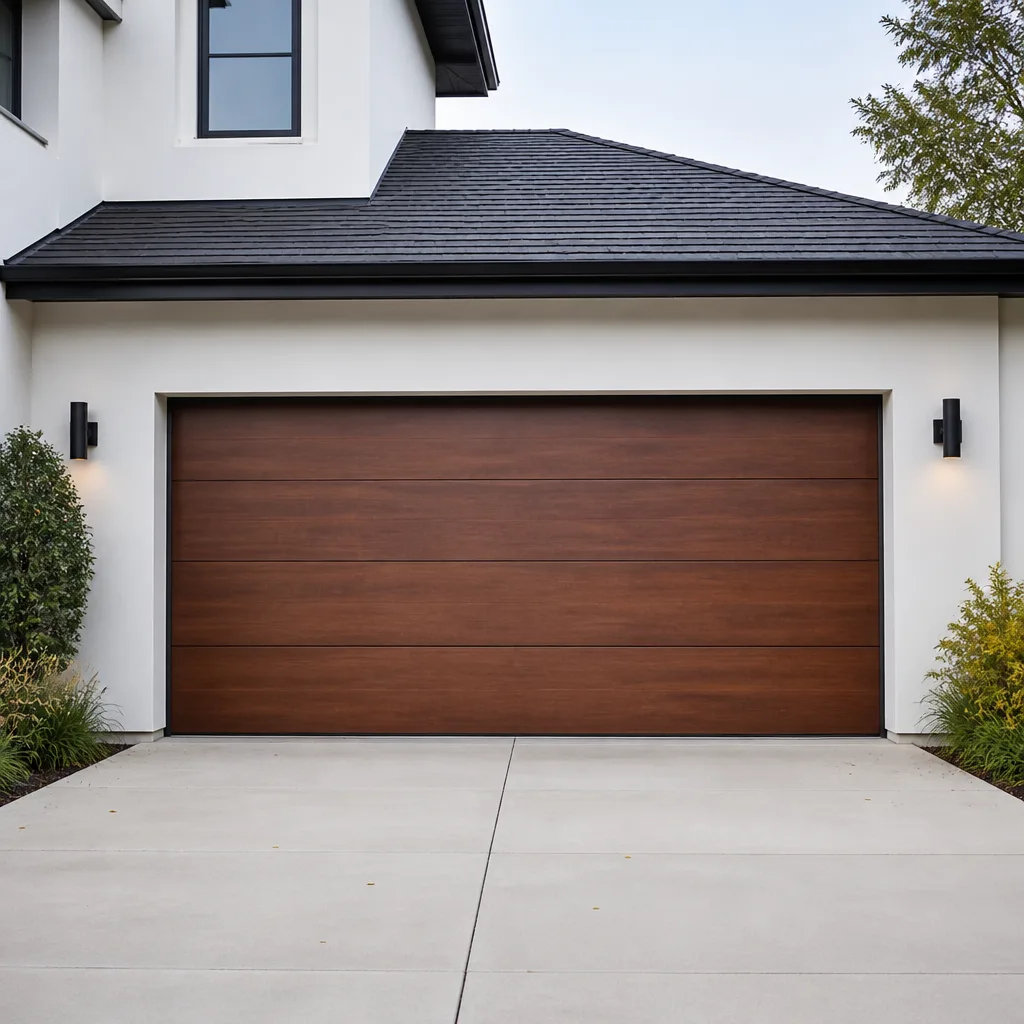 Modern flush
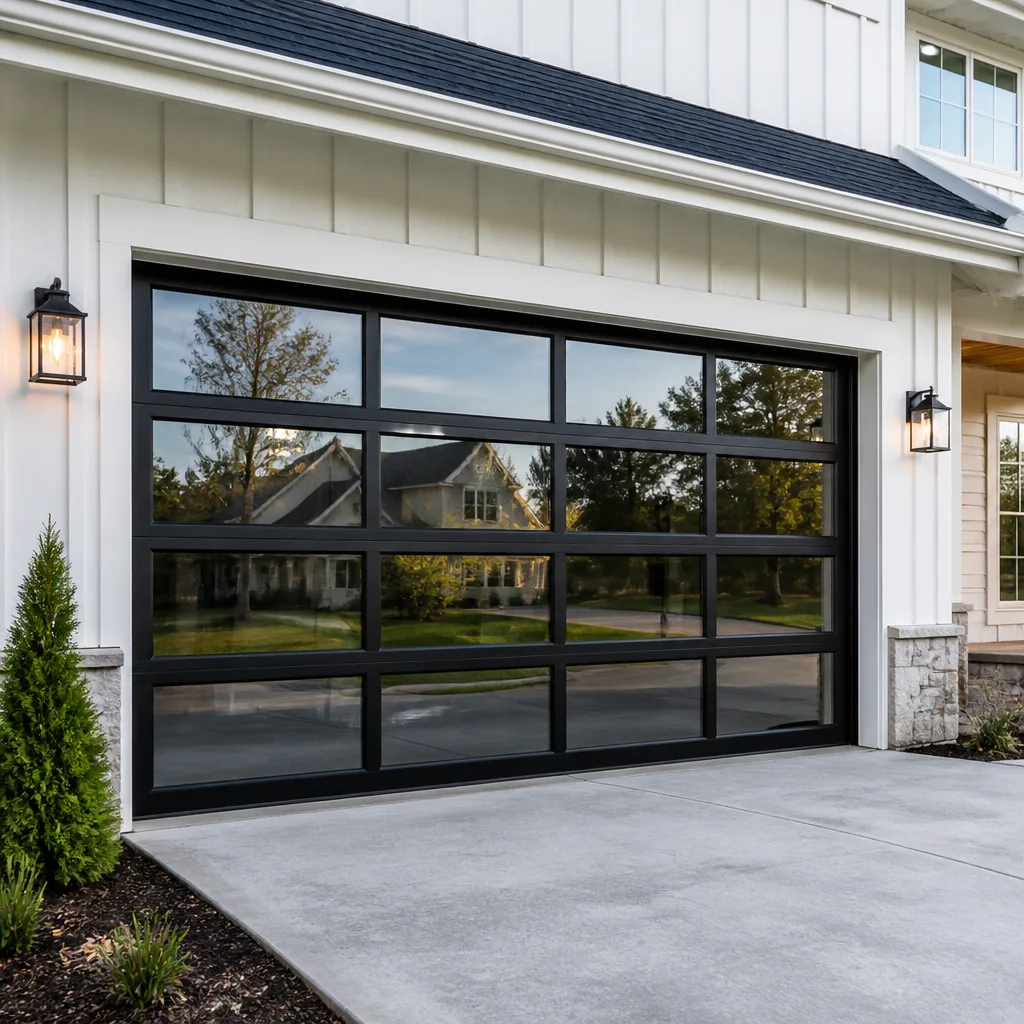 Full-view glass
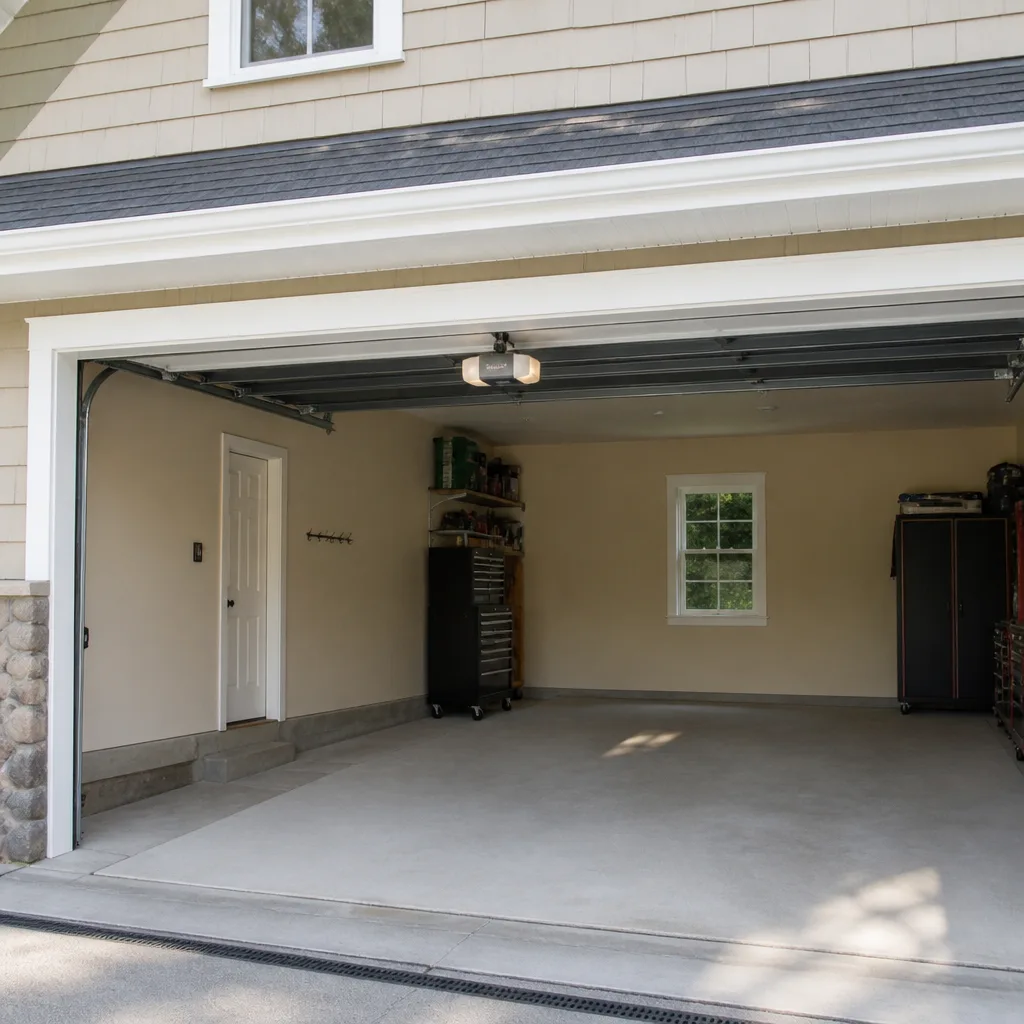 LiftMaster openers
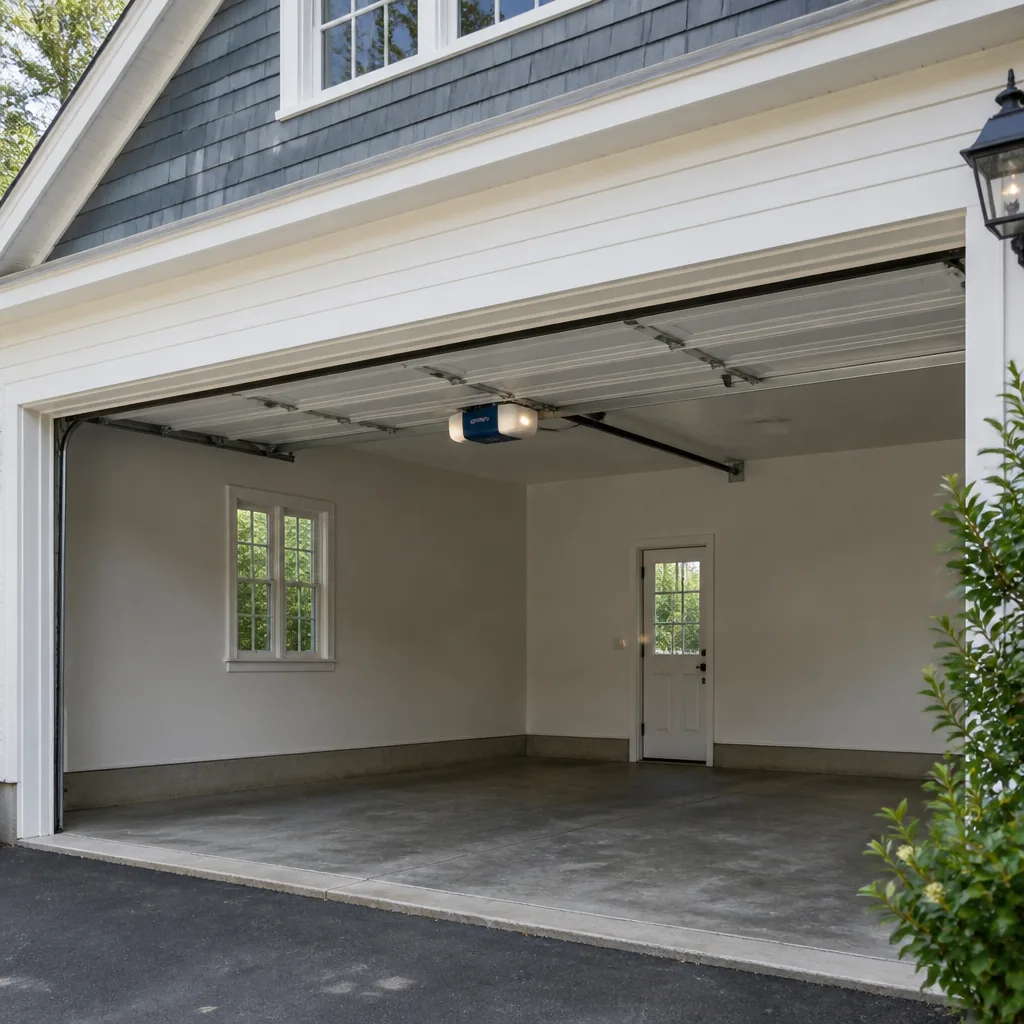 Chamberlain openers
Full 25-point door and opener safety check with every visit - springs, cables, rollers, tracks, and your LiftMaster or Chamberlain opener included
You get a price before we start. It does not change when the pro arrives.
Get your free estimateThe Complete Guide to Garage Doors in Long Beach
Most garage door guides are written for inland subdivisions where the air is dry and the ground doesn’t move much. Long Beach is different. This community sits on a barrier island in the Atlantic, and every recommendation you’ll read from a generic national site needs a Long Beach asterisk. Wind pushes on doors here. Humidity works on springs and hardware year-round. Storm surge is a real thing homeowners factor into decisions. If you’ve been told to “just buy the same door as everyone else,” that advice was not written for your house. This guide walks through what actually holds up on a barrier island, when to repair versus replace, how wind ratings and insulation work here, and how to avoid the expensive mistakes we see most often in Long Beach.
Quick Answer
Garage doors in Long Beach need to be chosen and maintained for a coastal barrier-island environment: wind-rated for the local exposure zone, resistant to salt-driven corrosion on springs and hardware, and insulated for a climate that’s milder than inland New York but still swings enough to matter. Repair-first makes sense when the panels and structure are sound; replacement makes more sense once corrosion or a failed spring system has reached the tracks and hinges. Whenever a spring, cable, or track issue is involved, that work belongs with a trained technician, not a weekend project.
Styles & brands we work with
- Raised-panel steel
- Carriage house
- Modern flush
- Full-view glass
- LiftMaster openers
- Chamberlain openers
Table of Contents
- Why Long Beach Garage Doors Face Different Conditions
- How Salt Air Affects Springs, Tracks, and Hardware
- Wind Load Ratings and the Coastal Exposure Zone
- Why R-Value Matters Differently in Long Beach
- Materials and Brands That Hold Up on a Barrier Island
- Style and Neighborhood Character
- Repair-First vs. Replace-First When Salt Damage Is Already There
- A Practical Maintenance Calendar for Long Beach Homeowners
Why Long Beach Garage Doors Face Different Conditions
A garage door in Long Beach lives in an environment that inland Westchester or upstate homeowners simply don’t have to plan around. You’re on a barrier island. That means constant wind exposure, humidity that rarely drops for long, and air that carries the chemistry of the Atlantic across every hinge, spring, and steel panel on your door. None of this destroys a garage door overnight. It does change how fast things wear and what the right material choices look like.
The big three forces at work in Long Beach:
- Wind exposure. Barrier-island homes catch sustained wind that inland properties are sheltered from. That puts real load on the door, the tracks, and the opener motor every time weather moves through.
- Humidity and salt-driven corrosion. The air here accelerates oxidation on the parts of a garage door that are already most vulnerable – springs, cables, hinges, rollers, and track fasteners.
- Storm cycles. Long Beach has lived through serious storm seasons, and many homeowners now plan their garage doors around what a bad storm could do rather than hoping it won’t happen.
Understanding these three forces is the whole game for a Long Beach garage door. Everything else in this guide flows from them. If you want the short version: pick hardware and materials for corrosion resistance, pick a door rated for the wind, and commit to a maintenance rhythm that stops small failures before they become expensive ones. When something urgent does go wrong, whether it’s a snapped spring or an opener that quit, a Long Beach Garage Door Repair Pros page is the fastest path to getting someone out to look at it.
How Salt Air Affects Springs, Tracks, and Hardware
Salt air is the single biggest reason generic garage door advice fails on Long Beach. Corrosion doesn’t just make things look ugly. It shortens the working life of the parts that carry the most load, and it starts on the inside of a component before you see anything wrong from the outside. Springs, cables, hinges, and fasteners are where corrosion does the most damage first.
What corrodes first
- Torsion and extension springs. These are wound steel under tension. Surface corrosion creates tiny stress points where a spring can fail earlier than it should. A spring that would last years inland may not last as long on a barrier island without protection.
- Cables and drums. The steel cable that runs the door up and down is thin, high-tension, and exposed. Corrosion on cables is not something to leave alone.
- Hinges and rollers. These are cheap parts individually, but corrosion here makes a door stiff, noisy, and hard on the opener motor.
- Track fasteners and bolts. A track held by corroded bolts doesn’t hold the same alignment. Misalignment then grinds the rollers and stresses the opener.
What actually holds up
Galvanized steel with a proper baked-on finish resists salt far better than painted cold-rolled steel. Stainless hardware on hinges and fasteners costs more up front, but it’s the right call in this environment. Aluminum tracks resist corrosion but need to be thick enough to hold alignment in wind; thin aluminum is a false economy. For the springs themselves, replacing with a coated or galvanized set is a small upgrade that buys real time on a barrier island.
One thing we tell every homeowner: use a garage-door lubricant, not WD-40. A proper lubricant stays on the surfaces that need it. WD-40 is a cleaner, not a long-term protective layer, and it will dry out and leave hardware more exposed than before. In Long Beach, lubrication is a maintenance job, not a one-time fix. When a spring has already failed or corroded past saving, garage door spring repair is the safe, correct next step.
Wind Load Ratings and the Coastal Exposure Zone
Wind load ratings tell you how much pressure a garage door can withstand before it fails. In coastal exposure zones, that number is not optional. It’s part of the building’s overall wind protection, and the garage door is often the largest opening on the house. A door that wasn’t rated for the local wind load is a weak link in the whole envelope, no matter how well the rest of the house is built.
Post-Sandy guidance from FEMA pushed coastal communities toward stricter wind-load thinking for garage doors: reinforced tracks, heavier hinges, and door panels tested to resist specific pressure ratings. If you’re replacing a door in Long Beach today, or you’re adding one where only a manual door existed, ask your installer for the wind-load rating of the door you’re considering and how it matches your home’s exposure zone.
What a wind-rated door actually includes
- Reinforced panels and struts. During wind, a panel can bow and then fail. Struts bolted across the back of the panels stiffen them against pressure.
- Heavier-gauge tracks. Standard tracks pull out of the framing under wind load. Wind-rated doors use heavier-gauge track and more fasteners.
- Upgraded hinges and rollers. The door needs to stay in its tracks under pressure. Weak hinges are where that fails.
- Rated rating on the door label. A legitimate wind-rated door carries a listed rating. Ask for it in writing.
Permits for structural changes like a new door or a wind retrofit are typically handled through the city’s building department. Rules can differ depending on the home’s location and the scope of work, so it’s worth asking the Long Beach building department directly before scheduling an install. A technician who does this work every day will know the drill; a general contractor who installs doors occasionally usually won’t. That’s part of why we focus entirely on garage doors in Long Beach.
Why R-Value Matters Differently in Long Beach
R-value is the measure of how well a garage door resists heat transfer. Inland homeowners are often told to buy the highest R-value door they can afford because winter heating bills demand it. Long Beach is milder than that. Winters here are cold but rarely brutal, and summers are warmer and more humid than inland neighbors. That flips the insulation conversation in a few practical ways.
What insulation actually does on a Long Beach door
- It keeps the garage warmer in winter. That matters most if the garage shares a wall with living space, which is common in Long Beach.
- It helps in summer too. An insulated door keeps the garage cooler during the hotter stretches and reduces humidity swing inside the garage, which helps slow corrosion on stored items and hardware.
- It quiets the door. Insulated panels and a solid backer reduce noise from the street and from the door cycling.
- It adds structural rigidity. A thicker insulated door flexes less in wind, which is a side benefit that matters more here than in an inland subdivision.
You don’t need the highest R-value door on the market in Long Beach. A middle-of-the-line insulated door from a manufacturer like Clopay or Amarr gives you most of the benefit at a sensible price. The exception is a garage under or attached to living space, where a higher R-value makes more difference to the rooms above. When choosing, weigh insulation against corrosion resistance and wind rating rather than optimizing for R-value alone. On a barrier island, the right door is a package, not a single spec.
Materials and Brands That Hold Up on a Barrier Island
Material choice matters more in Long Beach than almost anywhere else in the region, because the environment is unforgiving to the wrong pick. Here’s how the main options actually behave on a barrier island.
Steel doors
Steel is the most common choice and the easiest to get right. Look for galvanized steel with a proper baked-on finish. It resists the salt environment well if you keep the finish intact and lubricate the moving parts. Steel is also the most flexible material for wind-rated and insulated constructions. Amarr and Clopay both build steel doors that hold up here, and both are brands our technicians work on routinely.
Aluminum doors
Aluminum is lighter than steel, resists rust better when it’s properly finished, and can look great in modern designs. But thin aluminum can dent and bend in wind. In a coastal exposure zone, insist on heavier-gauge aluminum with proper wind-rated reinforcement. Otherwise you’ve traded a rust problem for a bend problem.
Wood and wood-composite doors
Wood-and-composite doors look beautiful against Long Beach’s traditional architecture, and a lot of local homes lean toward the classic carriage-house look. But wood requires more maintenance here – paint, sealant, and regular inspection – because the humidity and salt air work on it constantly. Composite doors are a middle ground: more dimensionally stable than wood, less corrosion-prone than steel, but still need care to hold up long-term.
Brands worth knowing
We work on whatever’s on your home, and our technicians are trained across the major brands: LiftMaster, Chamberlain, Genie, Clopay, Amarr, Wayne Dalton, Craftsman, and Raynor. Each of those companies builds doors and openers that hold up in coastal conditions if you choose the right model for the environment. The brand matters less than the specific product within it. A low-end model from a great brand will not outlast a mid-tier model from a manufacturer like Wayne Dalton if the mid-tier has better coatings and hardware. Ask what’s actually under the paint before you sign.
Style and Neighborhood Character
Long Beach has architectural character. The neighborhoods here are not cookie-cutter subdivisions, and a garage door that looks right in a suburban Ohio development often looks out of place here. Style choices should feel at home against the local housing stock, not fight it.
A few style considerations that come up again and again in Long Beach:
- Carriage-house doors work beautifully on the traditional homes throughout Long Beach, and the styles have improved enormously in the last decade. Modern carriage doors come with real wind-rated and insulated options, so you don’t have to choose between looking right and performing right.
- Panel styles – raised panel remains the workhorse, but flush or full-view doors look right on modern and contemporary homes. Full-view glass doors add light to the garage and can be a great fit for renovated homes, provided the glass is tempered and the door is properly rated for the local exposure zone.
- Color matters more than people expect. A faded or mismatched door is one of the first things visible from the street. On Long Beach homes, warmer neutrals and authentic hardware finishes tend to hold up visually longer than trendy dark colors that show every salt stain.
- Windows and inserts should be considered part of the wind rating, not an add-on. Rated inserts cost a little more; unreinforced inserts are a weakness.
The right style choice comes down to what your home already looks like and how it faces the street. A garage door that sits unshaded against the sun and wind is a different installation from one protected under a deep eave or a carport. The architectural context is part of the decision, not a decorative afterthought.
Repair-First vs. Replace-First When Salt Damage Is Already There
This is where a lot of Long Beach homeowners get stuck, and it’s the section most generic guides skip. Once salt damage is visible, do you repair, or is the door past saving? The honest answer depends on where the damage is.
Repair-first makes sense when:
- The door panels are structurally sound – no bending, no delamination, no holes.
- The tracks and framing are still firmly attached.
- The problem is one system – a spring, an opener, a roller set, a hinge bank – not the whole door.
- The finish is intact enough to keep protecting the steel.
Replace-first makes more sense when:
- The tracks are pulling out of the framing, or are visibly bent and misaligned beyond straightforward correction.
- Corrosion has reached the hinges, rollers, bolts, and springs at once, so you’d effectively be rebuilding the entire door.
- The door isn’t rated for the local wind exposure and the home is now being assessed for that.
- The panels themselves are compromised – delaminating, hollow, or bent.
Here’s the pattern we see most often in Long Beach: a homeowner waits on a corroded spring “because it still works,” and by the time they call, the track alignment has drifted, the rollers have ground down, and the opener has been compensating for all of it. That single failed spring has quietly turned into three repairs. Getting garage door repair on the spring early usually costs far less than waiting. From opener glitch to full door replacement, we handle both sides of that decision without pushing you one way or the other. If the right fix is a repair, we’ll say so.
A simple decision sequence
- Look at the springs and cables first. Rusty surface corrosion is normal in Long Beach. Flaking, pitting, or visible broken wires mean it’s time to replace.
- Check the tracks. Are they still snug to the wall? Are they straight? Do the rollers ride cleanly through them?
- Listen to the door. A door that grinds, shudders, or pauses mid-travel is telling you something is off.
- Assess the panels. If they’re still solid and attached, repair is usually the right call.
- Then look at the opener. A struggling opener isn’t always the opener’s fault. If it’s forcing a stiff door, the door is the problem, not the motor.
A Practical Maintenance Calendar for Long Beach Homeowners
Garage doors don’t need much, but on a barrier island the maintenance rhythm is tighter than it would be inland. What follows is the cadence we recommend for a Long Beach home. It assumes you’re checking the door yourself and calling a technician for anything involving springs or cables.
- Monthly: Look at the door from outside. Are the panels still straight? Any rust blooms? Open and close it once with the opener disconnected and listen for new noises.
- Quarterly: Lubricate hinges, rollers, and the torsion springs with a proper garage-door lubricant. Inspect the weather seal along the bottom. In Long Beach, the seal takes more salt and humidity than anywhere inland and it’s the first defense of the inside of the door.
- Twice a year: Test the safety reverse. Put a piece of 2×4 in the door’s path and confirm it reverses on contact. Test the photo-eye sensors. These are the two safety systems that matter most.
- Twice a year: Wipe down the exterior panels and finish. Salt residue builds up on paint and finish over months. A quick rinse and dry goes a long way.
- Annually: Have a technician inspect springs, cables, and track alignment. This is where small corrosion gets caught before it becomes a failure. It’s also a good time to have the opener’s force and travel limits checked against spec.
A door that fails in a windstorm or a humid summer often had warning signs months before. Maintenance catches those. Skipping it on a barrier island isn’t just inconvenient – it’s choosing to find out the hard way.
Common Mistakes to Avoid
- Treating Long Beach like an inland town. Advice written for Ohio subdivisions or upstate New York does not account for salt air or barrier-island wind. When a manufacturer rep or a blog tells you “the door we sell everywhere works,” ask them how it does with salt-driven corrosion on the hardware.
- Ignoring spring corrosion until it breaks. A broken spring is one of the most dangerous garage door failures, and on Long Beach it’s the failure most likely to happen next if you’re not watching. Do not try to replace a spring yourself, and do not run the door with a suspected bad spring. Call a trained technician.
- Using WD-40 as a lubricant. It’s a cleaner, not a protective layer. Get a real garage-door lubricant and apply it on a schedule.
- Choosing an opener without checking the door. A new opener on a stiff, corroded door will burn out faster than the old one did. Fix the door first when it’s the door.
- Skipping the wind rating to save money. On a barrier island, the wind load rating isn’t a sales upgrade. It’s the reason the door exists in the first place.
- Mixing materials carelessly. Light aluminum tracks on a heavy insulated door, or steel fasteners through an aluminum frame, create their own corrosion problems. Match the hardware.
- Letting the tracks drift. In Long Beach, corrosion on the fasteners is real. Loose tracks then grind the rollers, and the whole door goes out of tune. Check them twice a year and tighten what needs tightening.
See the difference
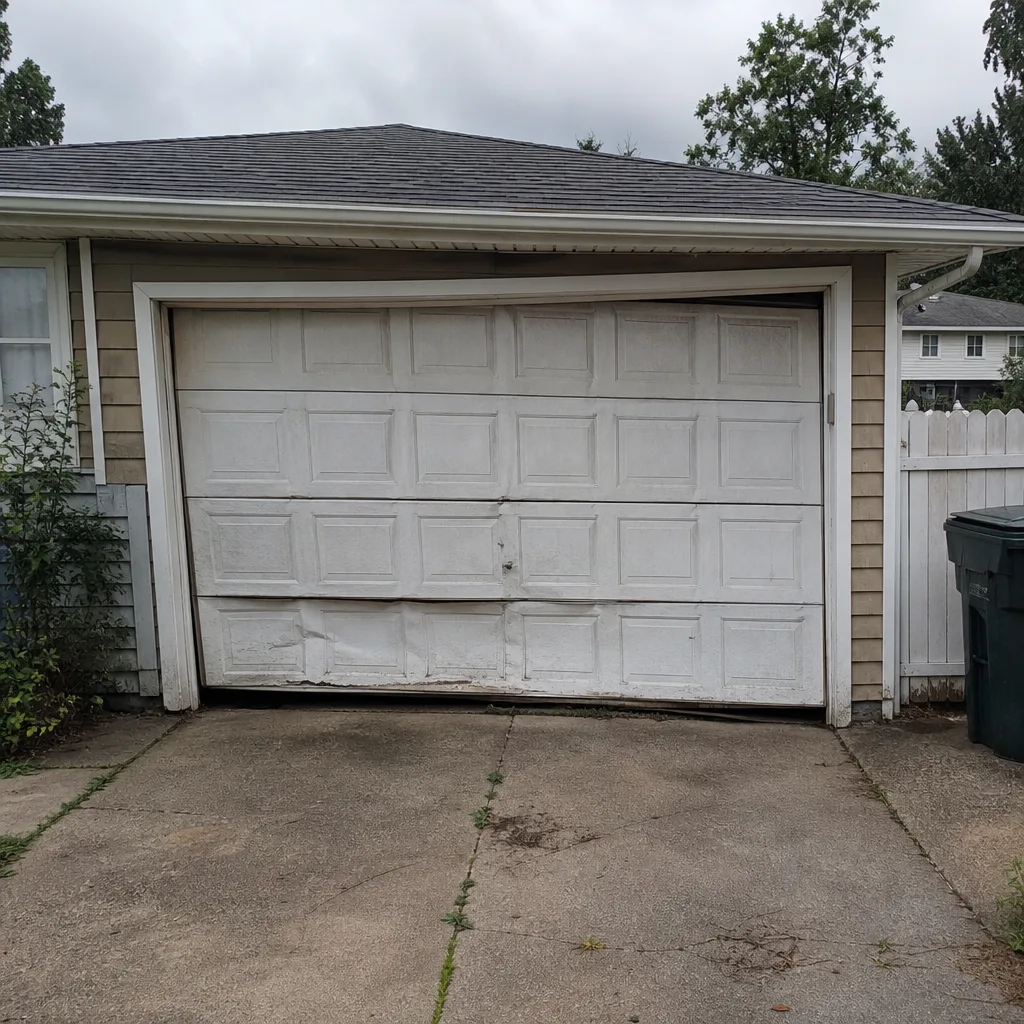 Before
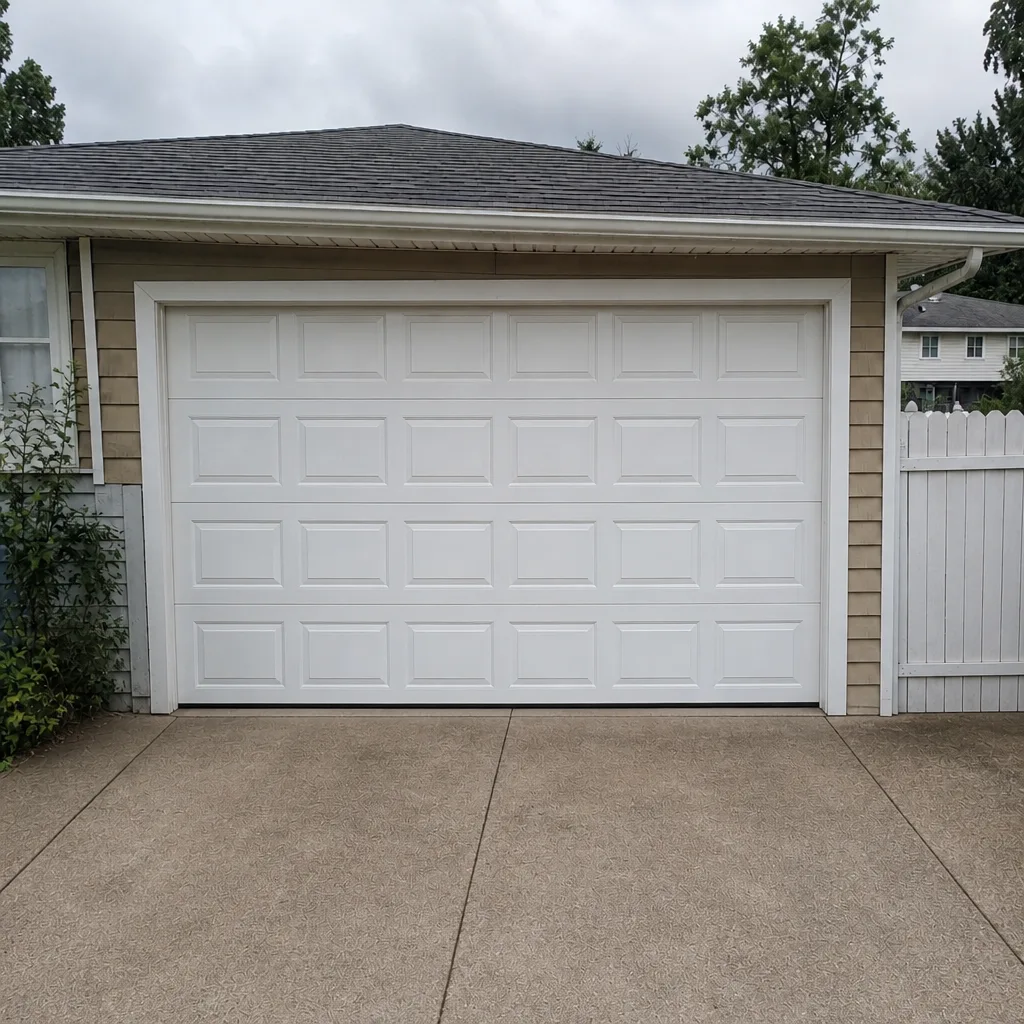 After
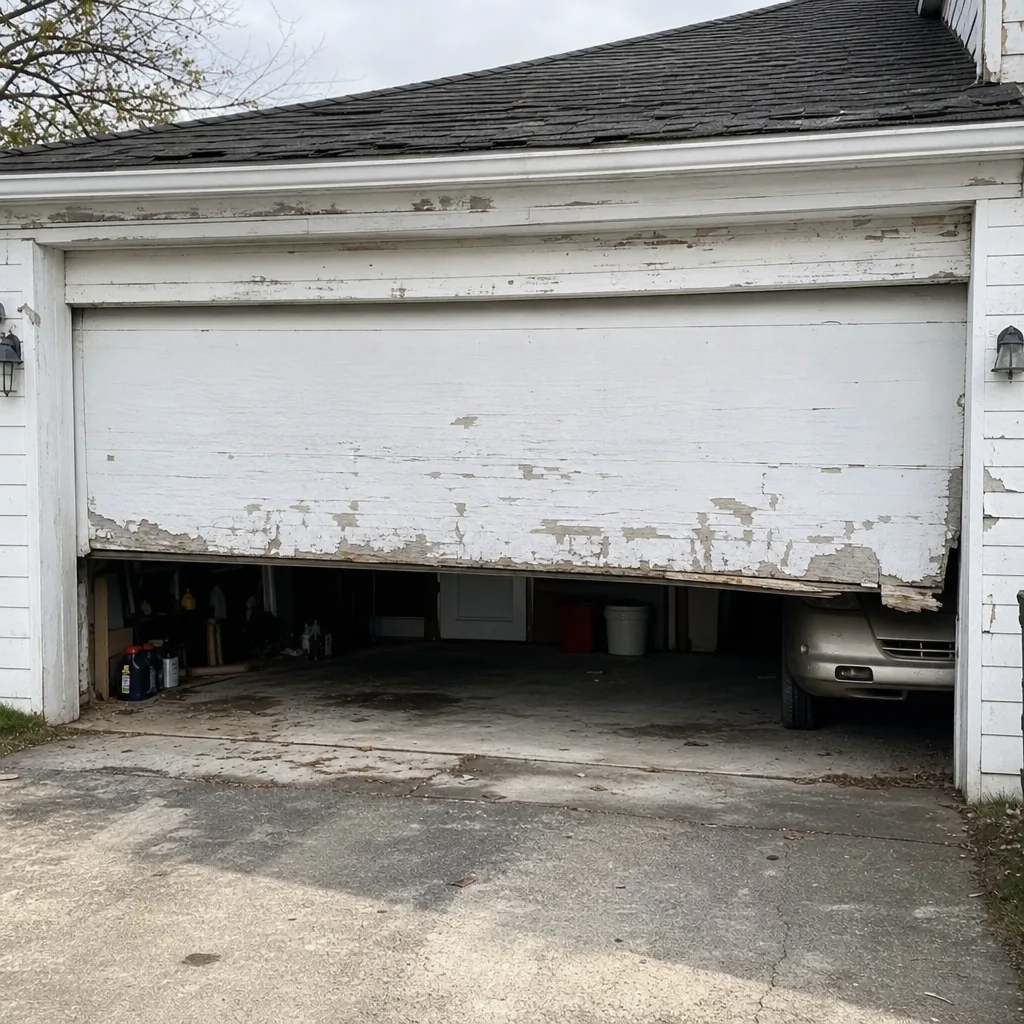 Before
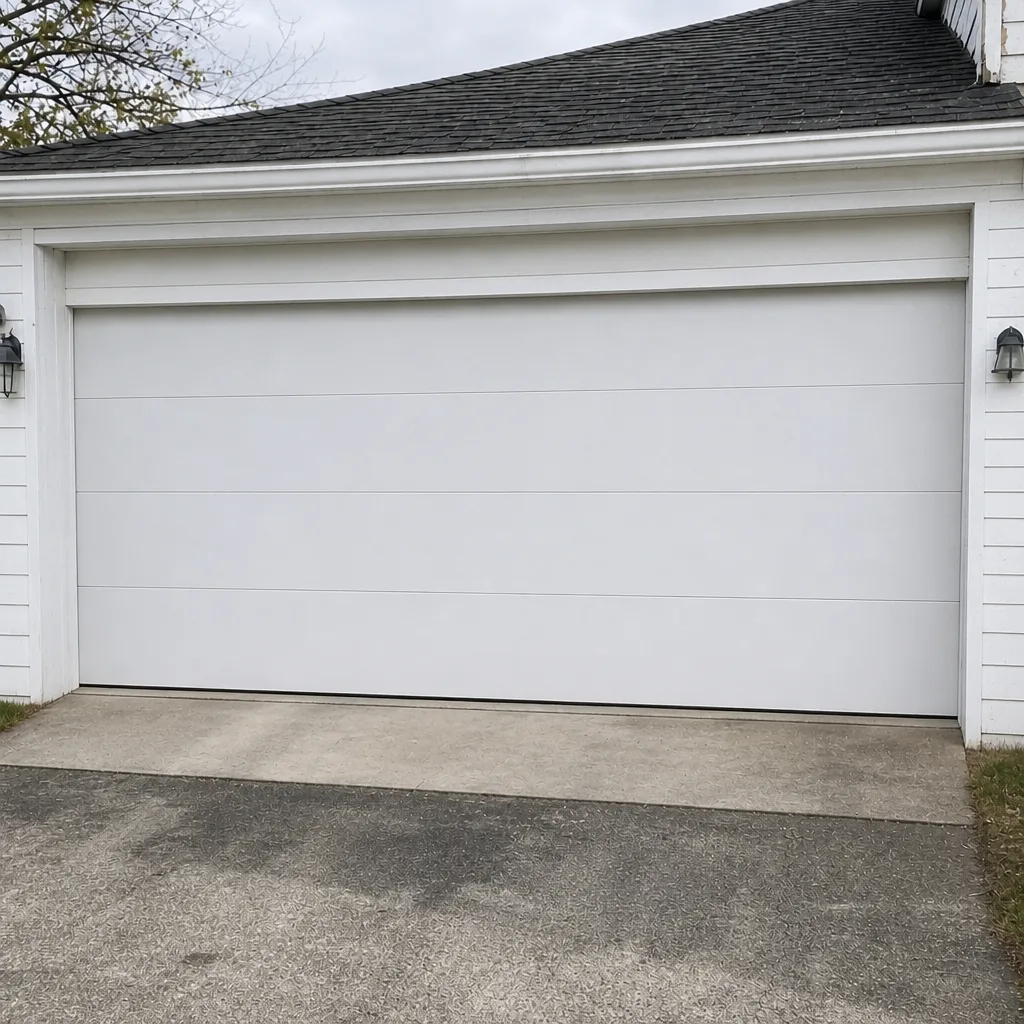 After
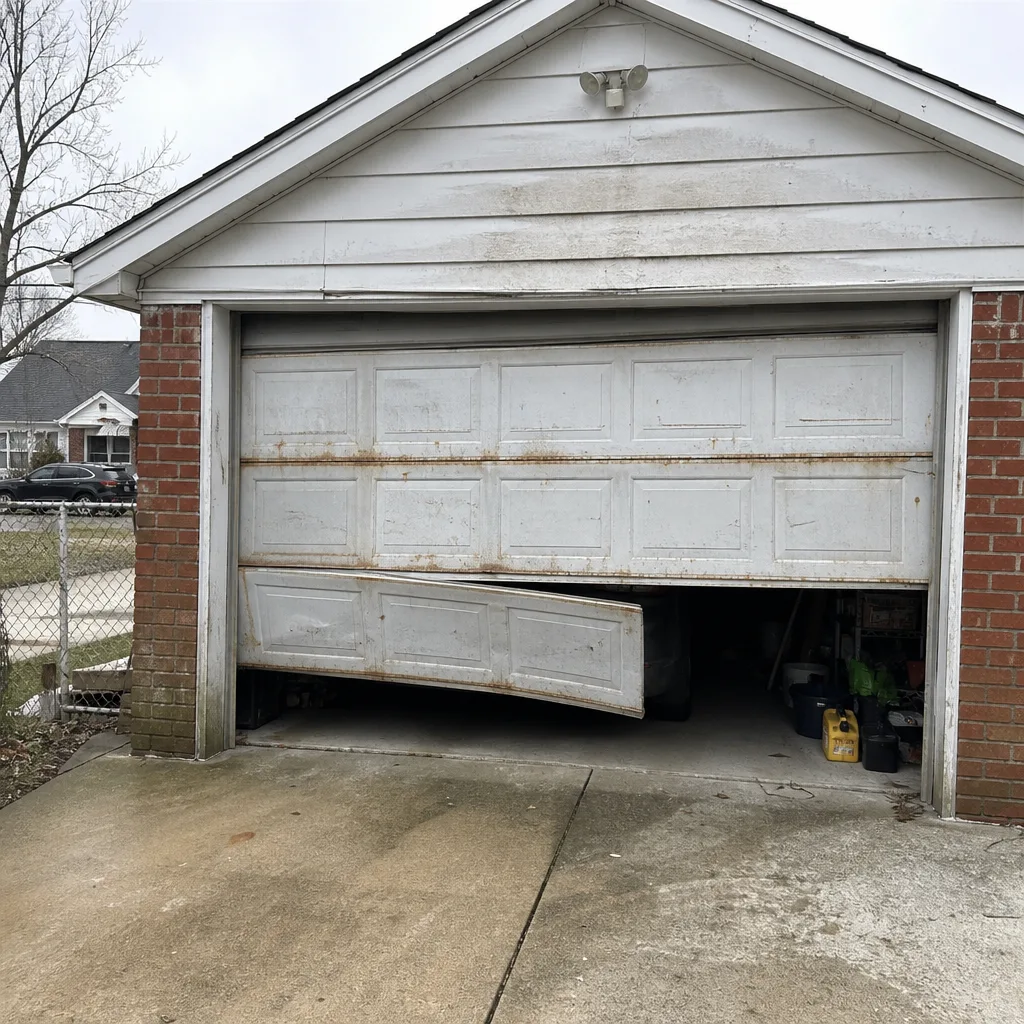 Before
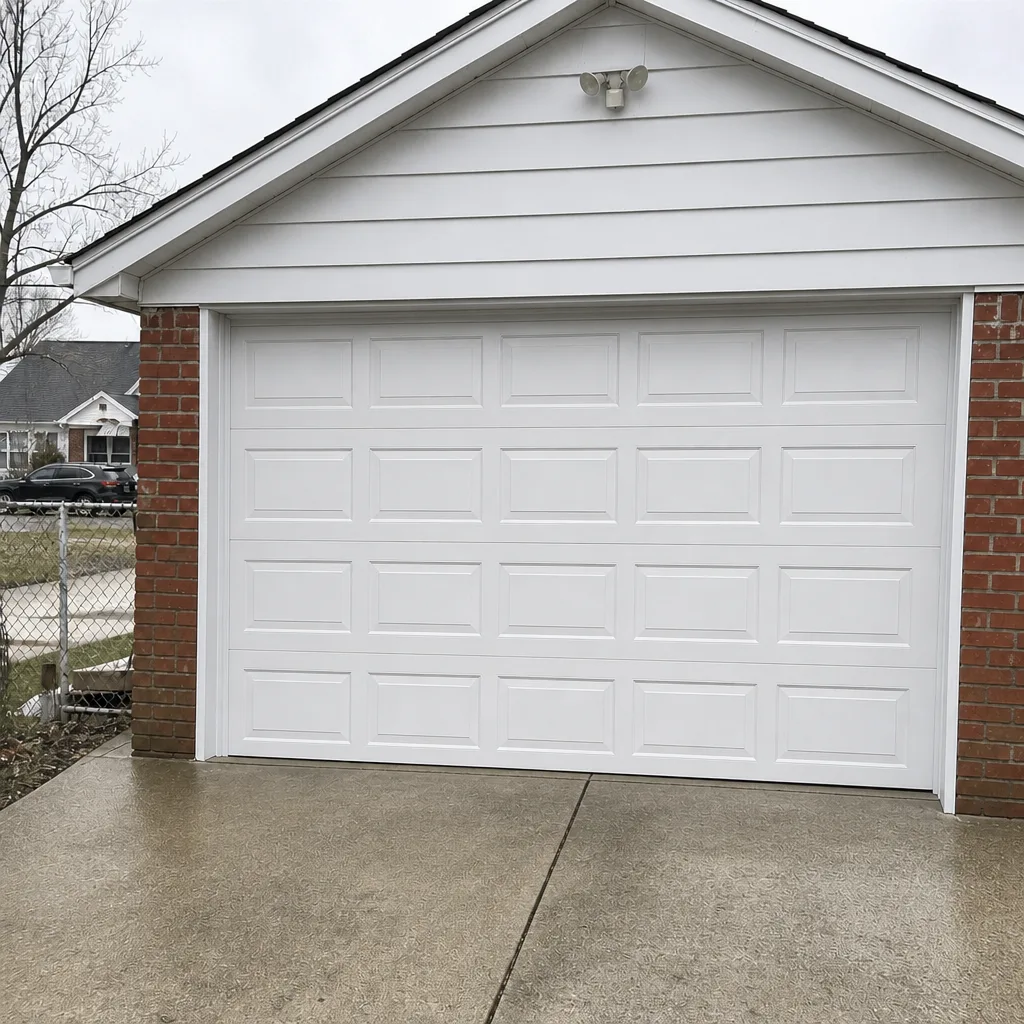 After
When to Call a Professional
There’s a clear line between what’s a homeowner check and what needs a trained technician. Call us if a spring breaks, if a cable comes off the drum or snaps, if a door comes off its track or slams down, if the opener reverses erratically or won’t respond to the remote, or if a door has visibly dropped or sagged at one end. Any of those is a safety issue, not a maintenance task. Spring and cable work in particular can cause serious injury if handled by anyone without the proper training and tools, and it’s not a job for a homeowner on a Saturday. On the installation side, call when you’re considering a new door and want the right spec for the local exposure zone. Long Beach Garage Door Repair Pros offers free estimates in Long Beach – call (855) 337-1762. Our technicians have up to 11 years of experience.
Frequently Asked Questions
Yes, if the door is being replaced or newly installed in a coastal exposure zone, wind-rated construction is the standard to look for. Long Beach is a barrier-island community, which puts real pressure on garage doors during storms. Ask your installer to show the wind-load rating of the door in writing and to explain how it matches the home’s exposure zone. If a contractor can’t answer that clearly, that’s a sign to get a second opinion.
There’s no fixed year count that’s right for every door in Long Beach, because it depends on the door’s weight, how often it cycles, and how much corrosion has set in. The sign to watch for is corrosion on the spring itself – pitting, flaking, or visible wire wear – rather than a calendar date. Have springs inspected annually, and replace them as soon as a technician sees real corrosion. Call (855) 337-1762 for an inspection.
In Long Beach, that pattern usually points to one of three things: a stiff door fighting a healthy opener, a spring that has lost some of its tension, or an opener that’s been working harder than it should because the tracks are out of alignment. Corrosion on hinges and rollers makes the stiffness worse on humid days. Have a technician run through the door and opener together rather than just replacing the motor.
Yes, but differently than inland guidance suggests. Long Beach winters are milder than upstate New York, so the heating cost benefit of a high R-value door is smaller here. Insulation still matters because it quiets the door, adds rigidity for wind exposure, and reduces humidity swing inside the garage. A mid-range insulated door from a manufacturer like Clopay or Amarr is usually the right balance for a Long Beach home.
Yes, and it should. Garage door openers and doors work as a system. If the opener is struggling, the door is often the real problem, and if the door is stiff, a new opener will fail faster than the old one. Call (855) 337-1762 for garage door opener repair and door work together, so the diagnosis accounts for the whole system rather than a single part.
Repair is usually the right call if the panels are structurally sound and the corrosion is limited to hardware and springs. Replacement makes more sense when corrosion has reached the panels, the tracks are pulling away, or the door isn’t rated for the local wind exposure. A technician can look at it in person and give you a straight answer, not a sales pitch. Call (855) 337-1762 for a free estimate.
The Bottom Line
Long Beach isn’t a generic garage door market, and a guide that treats it like one will cost you money. The barrier-island environment – salt air, wind load, storm cycles, and humidity – changes what you should buy, how often you should maintain it, and when repair is the smarter call over replacement. Focus on corrosion-resistant hardware, a wind-rated door for the local exposure zone, a sensible R-value for a mild coastal climate, and a maintenance rhythm that stops problems early. If a spring, cable, or track issue is on the table, that’s a trained technician’s job, not a weekend project. For anything in Long Beach, call Long Beach Garage Door Repair Pros at (855) 337-1762 for a free estimate – we quote before any work starts, and the written estimate is the price.
Written by the team at Long Beach Garage Door Repair Pros.